
In our increasingly competitive and complex world, there is a growing need for individuals who can think critically and creatively. While the education system often focuses on rote memorization and cramming, it is essential to shift our emphasis towards developing thinkers. Let’s see why thinkers are crucial for our education system and discuss how they have a great impact in practical life.
I. The Importance of Thinkers in Education
a. Encouraging Critical Thinking:
Thinkers possess the ability to analyze, evaluate, and synthesize information. This skill allows them to make informed decisions, solve complex problems, and evaluate the credibility of sources. The education system should promote critical thinking to foster independent thought and intellectual growth.
b. Enhancing Creativity:
Creative thinkers bring innovative ideas and fresh perspectives to the table. They can think outside the box and devise creative solutions to real-world problems. By nurturing creativity, the education system can unlock the potential within students, encouraging them to explore new possibilities and contribute to society.
c. Cultivating Lifelong Learning:
Thinkers are motivated to seek knowledge beyond the classroom. They possess a curiosity that drives them to continue learning even after formal education. Providing students with opportunities to pursue their interests and develop a love for learning encourages a lifelong pursuit of knowledge.
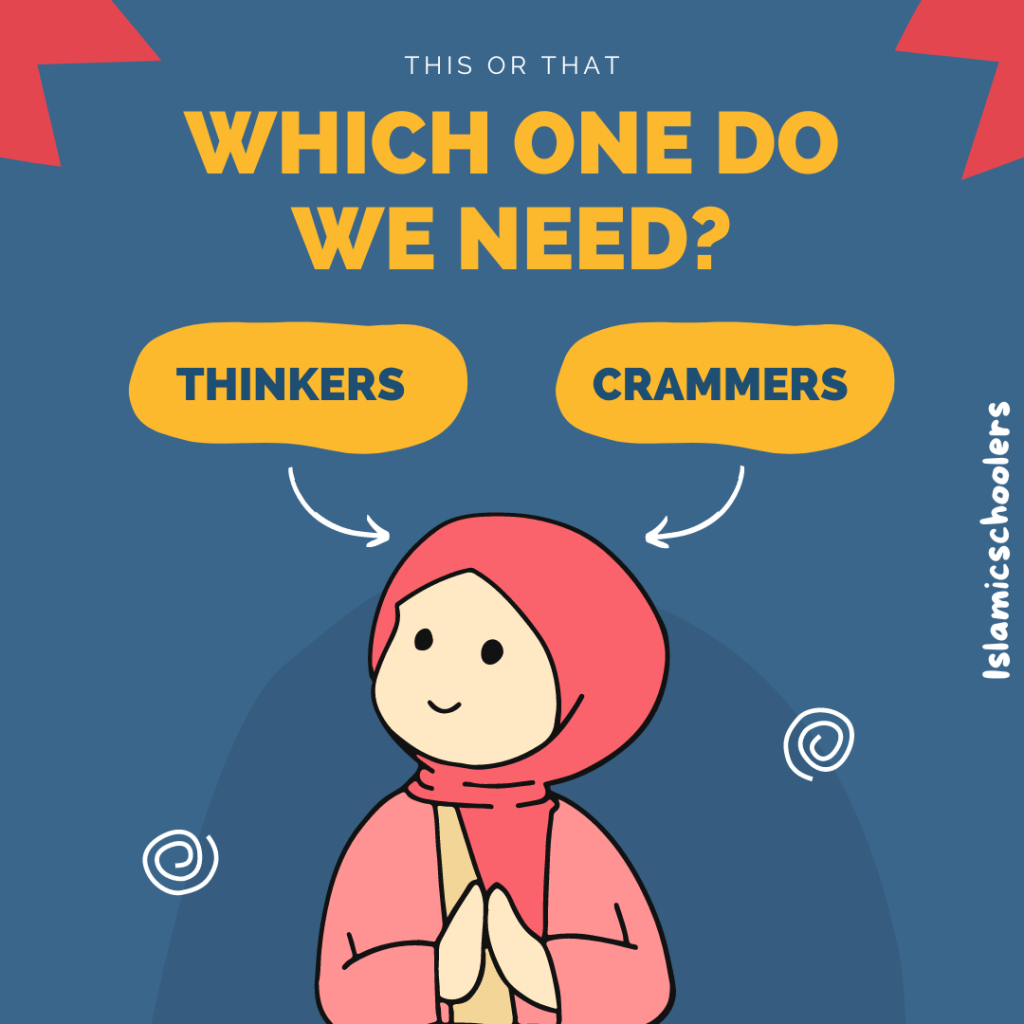
Now let us discuss how both, thinkers and crammers have an impact in Practical Life.
a. Thinkers:
i. Adaptability: Thinkers are adaptable individuals who can embrace change and navigate uncertainties, making them well-equipped for the dynamic nature of the professional world.
ii. Problem-Solving: Thinkers excel in problem-solving, enabling them to tackle challenges efficiently and find effective solutions.
iii. Innovation: Thinkers often contribute to innovation and progress in various industries, driving economic and social growth.
b. Crammers:
i. Limited Application: Cramming tends to result in superficial understanding, making it challenging to apply knowledge to real-life situations.
ii. Lack of Creativity: Crammers may struggle to think creatively or independently due to their reliance on memorization.
iii. High Stress Levels: The pressure to retain a vast amount of information in a short period can lead to heightened stress levels and mental health issues.
In conclusion, our education system should prioritize the development of thinkers rather than crammers to equip students with the skills they need in today’s world. While cramming may yield short-term results, it falls short in fostering critical thinking, creativity, and lifelong learning. Thinkers bring enormous advantages to practical life, including adaptability, problem-solving abilities, and the capacity to drive innovation. By shifting our educational focus towards thinking, we can cultivate a generation capable of innovation, progress, and making a positive impact on the world.